

Key Takeaways
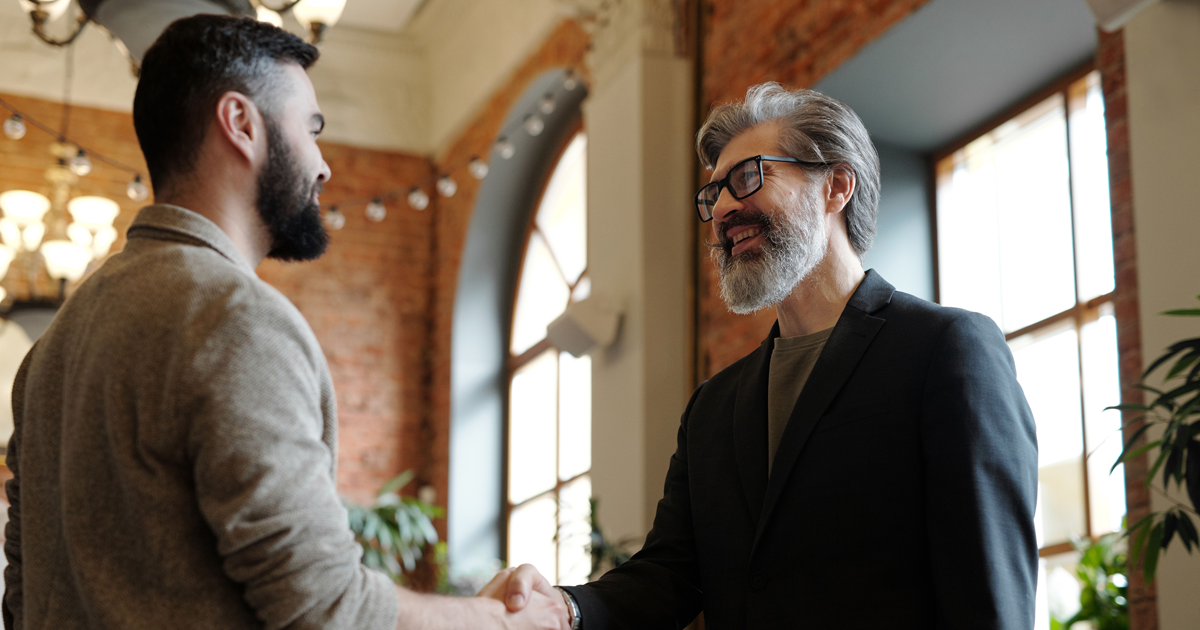
Showing up in person is the message. Almost none of your competitors will do it, and buyers have learned to tune out everything automated.
Treat the front desk like they own the company. Acknowledge they're busy, learn their name, and ask when to come back.
Consistent, respectful presence wears down any shut door. Never react to a cold reception, and scale back to quarterly visits before you stop visiting completely.
Who this article is for
This article is for sales reps who sell locally or regionally who are trying to weigh if in-person visits to potential customers is a worthwhile investment of time and resources.
What takes longer? Sixteen calls that no one ever answers, or three or four visits in the lobby?
I ask that question whenever someone tells me drop-in visits are a waste of time. Usually, they've never added up how much time the alternative takes.
Here's what I've noticed lately. Phone calls, emails, texts: all of it feels more fake than it used to. Everybody knows an algorithm might have written the message in their inbox, and they treat it that way.
But you are irreplaceable. You are uniquely you. And you showing up at someone's office means all the more right now.
In-person visits are slower; and they take a bit more time and work, but together we’ll see why they’re more effective than ever.
Why Do In-Person Visits Work Better Than Digital Outreach Right Now?
When you meet someone in person, you build a different kind of relationship than you do over email. It's a different basis for trust.
I get asked whether there's anything behind that besides gut feeling. There is.
Researchers at the University of Waterloo and Cornell had people ask strangers for a small favor, either face to face or by email. The people who asked in person were 34 times more likely to get a yes.
And here's the part that should stick with you. The people making the requests didn't see it coming. They expected email to work about as well as asking in person.
The same researchers followed up in 2022 and found that even a video call fell well short of asking in person. And the people asking underestimated how big that gap was.
There's biology in it too. Yale researchers put people across from a partner, either on a screen or through a pane of glass in the same room. With the real person, people looked longer, their pupils widened, and their brain activity was more in sync.
A 2025 study of 31 pairs of people found the same thing from another angle: online conversation produced weaker brain-to-brain synchronization than talking face to face, and eye contact strengthened it.
One more piece. A researcher at the University of Toronto found that people say yes in person partly because they expect to see your reaction if they say no. It's a lot harder to turn down someone's face.

What you get from showing up
You might make a lot of drives and a lot of door-knocks. But think about what you can now draw from once you've been to their office. You have real information.
"Hey, I could see the boys in the shop, and..."
"Hey, I saw Bob coming out of the office on Thursday, and..."
Now you have a personal, physical rapport and a contextual basis for the conversation. Everything AI writes sounds fake from the first line.
I'll even go as far as this: ten in-person visits a day are going to generate more promising results than a hundred cold-fire emails ever will.
I'll be honest, there's some truth to the algebra of time efficiency. Digital outreach reaches more people per hour. But almost none of your competitors are going to do this. You change the playing field.
How Do You Prepare Before You Walk In?
Here's my first rule: try to pre-empt the visit with a call or an email. Don't make an in-person cold visit if you can avoid it.
I'll also tell you there's no silver bullet for that first message. The person on the receiving end is different every time, and you'll rarely find out why one approach worked and another didn't.
Sometimes it's only timing. There was a buyer at HEB I tried to reach for months. When he finally got back to me, he said, "Oh, right, Ed! I was out of the office for six weeks on FMLA."
I'd talked, messaged, emailed, and texted. He just wasn't there.
So instead of hunting for a magic message, I put my energy into what I can control. Here's how I get ready:
-
Send something first.
Call or email ahead so you're not walking in cold. If you've sent something, you can mention it at the door. If you haven't, it's fine. You ask the same thing either way: "Do you have just a couple of minutes?"
-
Know who you're going to see.
A visit takes planning, just like a networking event does. Find out who you can about the business, and have an idea of who your target is and what you're looking for before you pull into the lot.
-
Pick your message.
The content is the one part of that first contact you control. In my experience, people respond to one of two kinds:
Intellectual. "I can help you improve your margin. I can help you raise your sales. I can help you cut your costs." Back it with data. "In your industry, profit margins are higher than yours."
Emotional. I had a customer in San Antonio who removed trash and construction debris. Some of their buyers hired them just to be green, no matter the cost. It resonated with them. For others, the emotional pull is prestige, recognition, or wanting to be the know-it-all in the room.
You don't have to guess which one a buyer is. Alternate them. Send one, wait a week, then send the other.
You can make generalizations. A supply chain person is usually driven by pure cost, and an HR person may be more emotional. But treat those as starting points, because every buyer is unique.
-
Know your opener.
Be ready to say who you are and what you do in one extremely concise sentence, and to say you'll keep it brief.
-
Have your questions and your card ready.
You'll only have time for a question or two with the front desk. Decide them ahead. "When would be a good time, and the best way, to reach him?" works well. And have a card to leave, in case the timing is wrong.
A little preparation goes a long way. Walk in knowing who you want to meet and what you want to ask, and the visit is far more likely to go your way.
What About the "No Soliciting" Sign?
Some people tell me to respect the sign and stay out. If you're walking in with the notion of selling something to somebody, I agree with them.
But I coached a rep in Fort Worth who worked for a staffing company, placing temp-to-hire workers in manufacturing and warehousing. He found plenty of industrial parks full of companies to call on, and he kept getting shut out at the door.
I told him to keep going in. Even with the sign, you're not there to solicit. You're there to meet somebody.
If you truly believe that, it's a whole different attitude, and people feel it.
I don't believe in having one set of tactics for networking events and another for lobbies. It's one platform. You're there to get to know people. Here's how it might sound:
"Hey, I notice the no soliciting sign. No worries. I'm not here to sell you a thing. I just want to know what you all do here. What kind of business are you in?"
How Should You Treat the Gatekeeper?
Treat the first person you meet as if they own the company. Take an interest in them.
The first thing I usually say is that I know they're busy. Even if they don't look particularly busy, assume they are, because you are interrupting their day.
"Hey, my name is Ed Miller. I just wanted to stop in, and I see you're really busy. Do you have a couple of moments where I can explain why I'm here?"
Notice what that does. It puts the moment on them, and you're asking for their time respectfully. Rarely do they say no.
If they ask, "Is this a sales call?" the answer is, "Yup." Then ask for a couple of minutes to introduce yourself.
There's research behind this instinct, too. French researchers found that simply telling people they were free to say no raised agreement to a request for money from about 16 percent to about 41 percent. Respecting someone's choice makes them more willing to help.
A few tips I’ve learned throughout the years that have made all the difference:
Learn names and write them down
Next time, you're not a stranger. Treat "Barb" or "Carol" like a friend. "Is Bob in today? No? No worries. How've you been?" Spend a couple of minutes on the connection.
Ask the one or two questions you have time for
"Thanks! I'm sure the owner is busy. When would be a good time, and the best way, to reach him?" It gets them on your side. They want to be honest with you.
Bringing food helps, but don’t do it all the time. (And don’t hang around if you do.)
Bringing food is powerful. I've had people drop off a box of donuts, say "Here's breakfast on me," and leave. I sent a thank-you to that person. If you stay, it can start to feel coercive, so bring it and walk away.
And don't do it all the time. They'll start to expect it, and your boss won't love the expense.
Don't ever waste a chance to learn a little more at that front desk. Just remember that your gatekeeper may have details wrong, so use what you hear as a lead and not as a fact.

What If You're Rebuffed or Get an Icy Reception?
Say the person at the front desk is cold right away. "We don't do walk-in solicitations!"
Start with "I apologize, I realize I'm butting in on your day." Then, "Understood. What's a good way to connect with you all?"
Remember, that person may have been tasked with putting up a steel door. Their job might depend on keeping people like you out.
Every time you acknowledge them, you chip away at it. Your consistent presence, however it shows up, slowly wears those shields down.
You can ask them directly, too. "It looks like you folks should be a good fit for us. Is that right? I'd hate to bother you if we're not."
Now suppose you do get in front of the decision-maker, and the reception is icy. You never, ever react outwardly to bad body language.
Shorten it. "Bob, I'll keep this short. I'm Ed with SalesEthics." Give a one-sentence description of what you do, and ask if you can connect when he has a better time to talk.
And don't assume. Salespeople are notorious for thinking they know why a customer is acting a certain way. Maybe Bob just got bad news about a family member's health.
What if they already work with a competitor?
That's more than fine. Say so.
Stay completely neutral. You're not there to outperform anyone, and what you learn is still valuable. There may be something you can do differently and better.
Should You Go Back? How Long Do You Keep Going Back?
Yes, you go back. All of sales is hard work and consistent presence.
A week or two later, you put them back on your list. Now you know the front desk person's name. Maybe you've sent a card or an email in between.
"Hey, do you mind if I shoot over an email with a couple of questions later this week?" Don't assume you can call or email until you have some permission.
The question I hear most is, "How long do I keep doing this?" If you've done everything you think you can, move them to a once-per-quarter visit.
And be upfront about it. "Hey, I'd love to meet Bob, but it seems there's never a good time." You don't need to explain every detail. Only what pertains to them.
Eventually, if you keep investing and truly nothing comes up, there's a time to call it quits. Weigh it honestly: will this customer buy enough to be worth the time and the expense?
Even when the sale doesn't come, the effort can pay off. I spent months trying to reach that HEB buyer. He was eventually replaced, and his successor took my call.
I never got the sale. But I learned a lot about how HEB was structured and what motivated them, and I used it later.
What Happens When You Finally Meet the Decision-Maker?
Don't change a thing. Go with your natural discovery.
I rarely reveal that a piece of information came from the front desk. Carol may have gotten it wrong anyway.
Know that the cycle restarts. Having rapport with the gatekeeper doesn't mean you have it with the decision-maker, so you're building it all over again with different tools.
Send things that help their work, like industry news. I was reading about economic forecasting for Tulsa recently. Lots of good stuff. Shoot it off to the people on your list, and you're done.
I had another customer in Tulsa whose company moved its manufacturing from South Carolina to Tulsa. He took me into his office, and he wasn't quite icy, but he told me, "We don't have anything for you guys to do. We're just trying to get our operations online."
I kept going back. Every so often he'd ask, "Ed, do you know who supplies X with Y?" And I'd go hunt down that data.
Every time he asked a question, I found the answer. Ultimately, I did end up doing business with him.
Conclusion
Respect for the gatekeeper's time, honesty about why you're there, and a consistent presence: those are the same traits that run through everything we teach.
It's easier to delete an email. It's easier not to take a call. It's a lot harder to ignore someone who's standing in front of you.
But that only works if you treat everybody in that building like a valuable member of the organization. Because they are.
So go back and look at your list. Pick ten businesses within driving distance, and plan your first visits this week.
If you want help building a field approach that respects people's time and still earns the meeting, SalesEthics Sales Training is built for exactly stuff like this.


